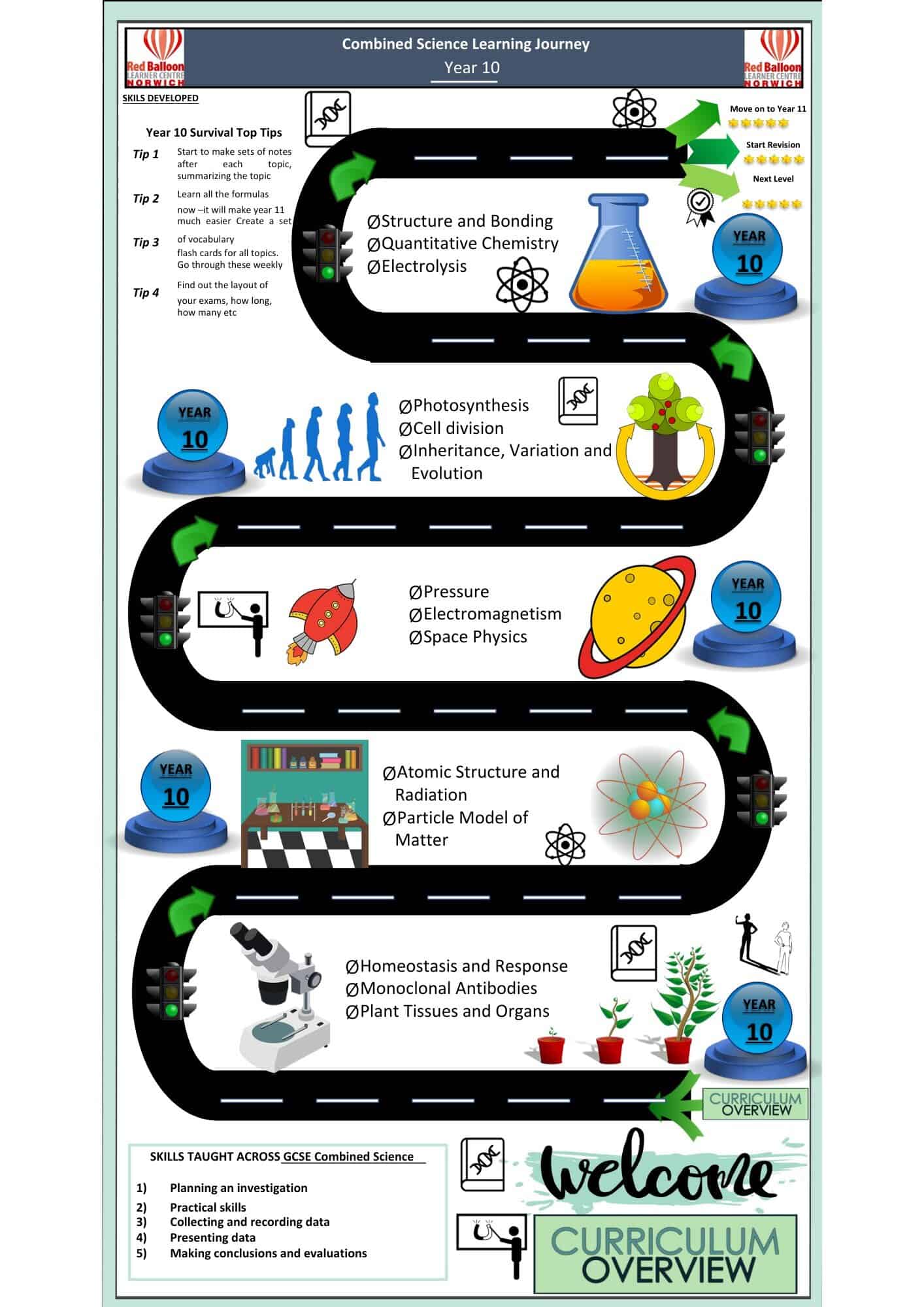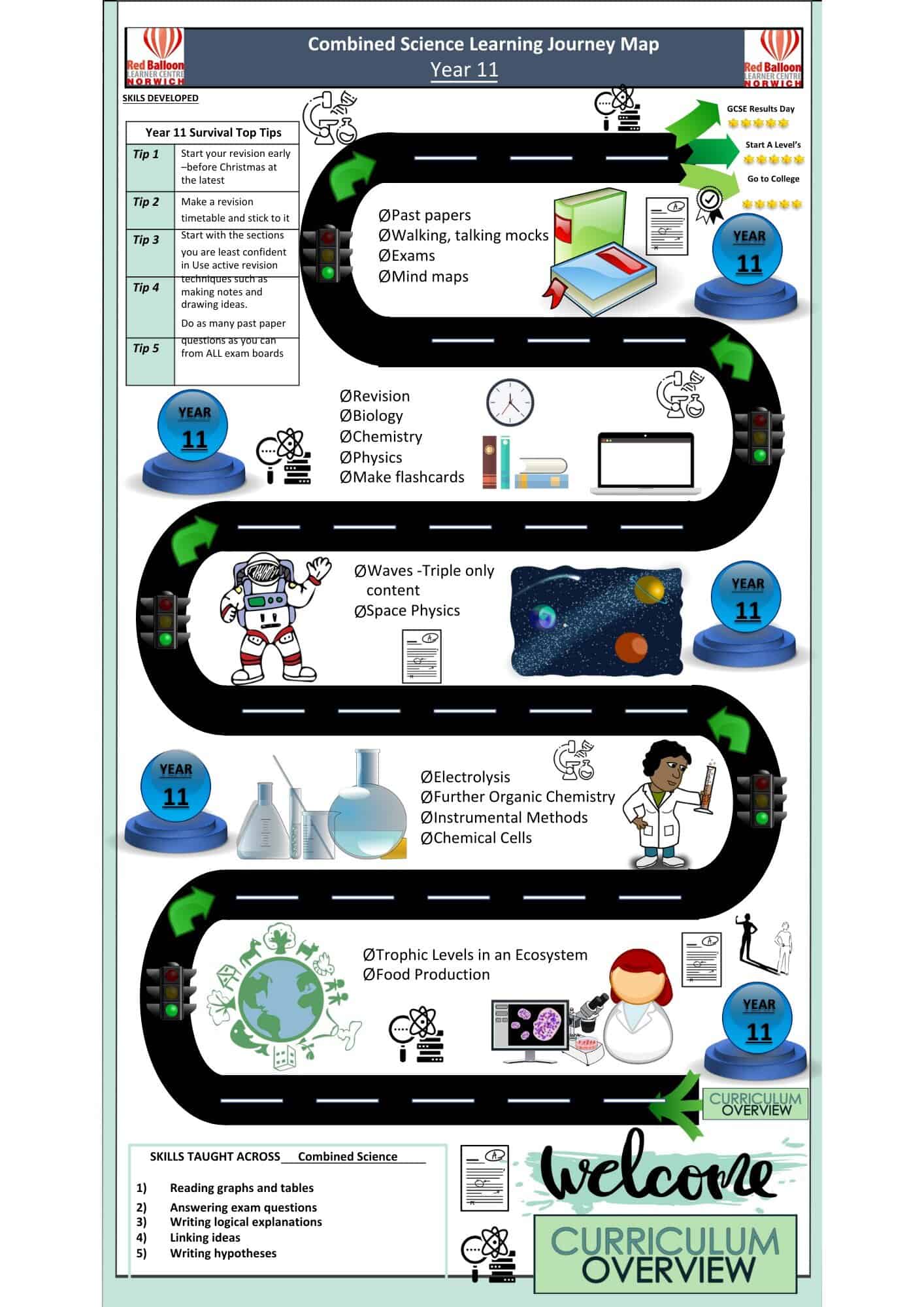
Science Combined GCSE
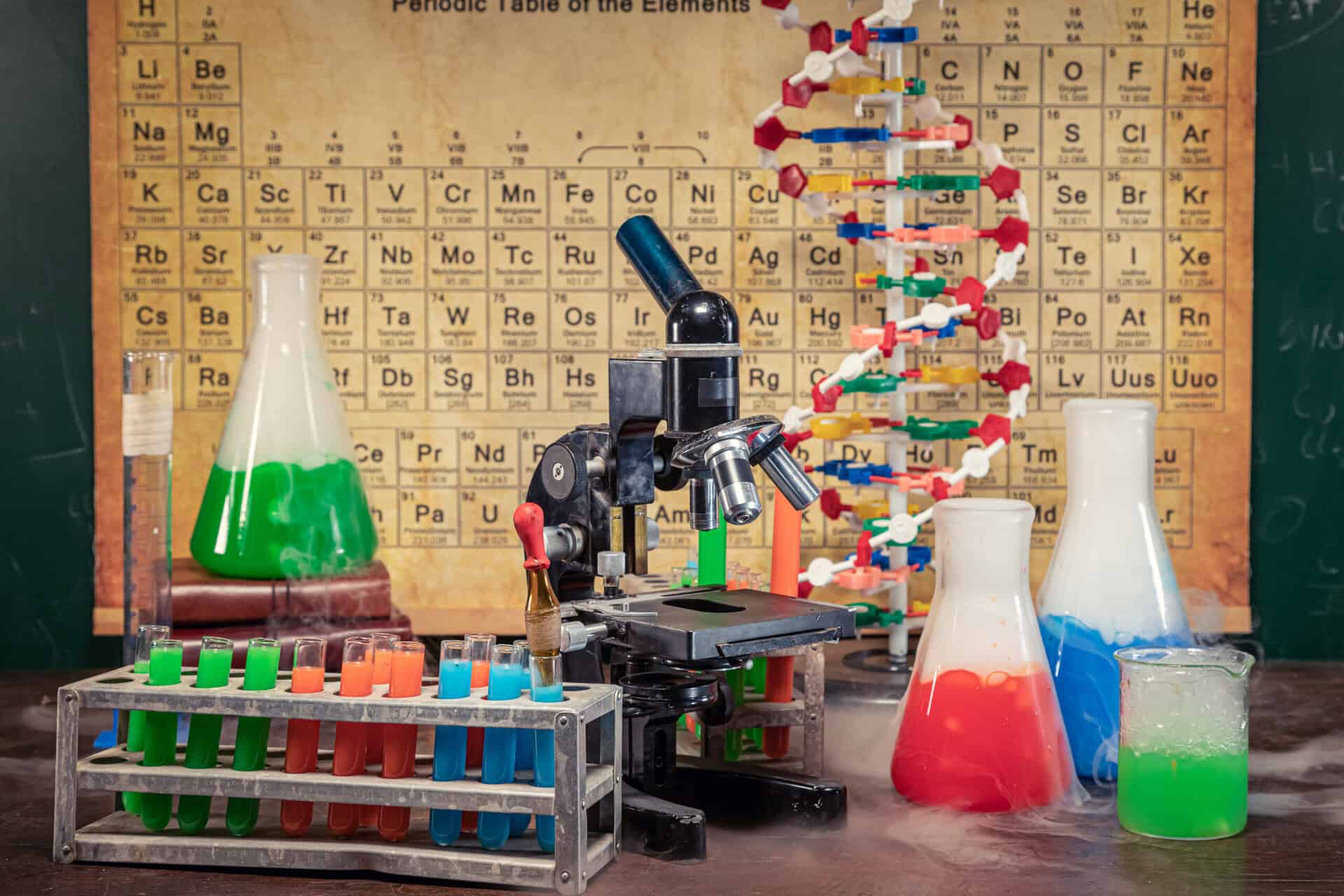
GCSE study in the sciences provides the foundation for understanding the material world. Scientific understanding is changing our lives and is vital to world’s future prosperity, and all learners should be taught essential aspects of the knowledge, methods, processes and uses of science.
They will be helped to appreciate how the complex and diverse phenomena of the natural world can be described in terms of a small number of key ideas relating to the sciences which are both inter-linked and are of universal application.
These key ideas include:
the use of conceptual models and theories to make sense of the observed diversity of natural phenomena
the assumption that every effect has one or more cause
that change is driven by differences between different objects and systems when they interact
that many such interactions occur over a distance and over time without direct contact
that science progresses through a cycle of hypothesis, practical experimentation, observation, theory development and review
that quantitative analysis is a central element both of many theories and of scientific methods of inquiry.
Qualification:
OCR Combined Science A
Lesson Plans
Further Information
Content
Develop scientific knowledge and conceptual understanding through the specific disciplines of biology, chemistry and physics
- develop understanding of the nature, processes and methods of science, through different types of scientific enquiries that help them to answer scientific questions about the world around them
- develop and learn to apply observational, practical, modelling, enquiry and problem solving skills, both in the laboratory, in the field and in other learning environments
- develop their ability to evaluate claims based on science through critical analysis of the methodology, evidence and conclusions, both qualitatively and quantitatively.
Biology | Chemistry | Physics |
|
|
|
Assessment
Written examination: 100%
Pupils will have the option of sitting foundation tier (Grades 5-5 to 1-1) or higher tier (Grades 9-9 to 4-4).
Both higher and foundation tier consist of six GCSE papers.
Biology: 2 x 60 mark papers of duration 1hr 10 mins (16.7% each)
Chemistry: 2 x 60 mark papers of duration 1hr 10 mins (16.7% each)
Physics: 2 x 60 mark papers of duration 1hr 10 mins (16.7% each)
OCR GCSE Science All Topics Populated
https://rbnorwich.org.uk/wp-content/uploads/2025/05/ocr_gcse_science_all_topics_populated.pdf